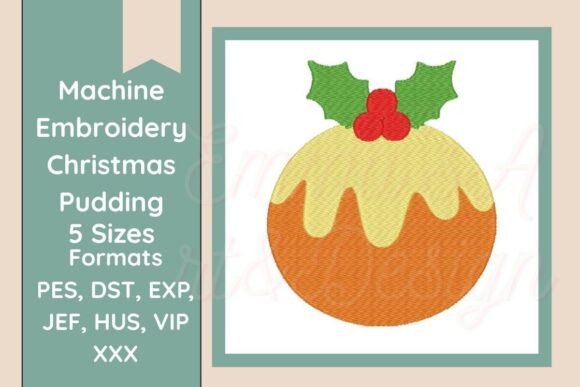
Christmas Pudding Machine Embroidery
First Impression: Festive, Whimsical, and Instantly Recognizable
As an embroidery designer who’s prepped over 200 craft fair booths—from snowy Vermont markets to sunlit Southern pop-ups—I know what stops a shopper mid-aisle. The Christmas Pudding Machine Embroidery lands squarely in the “festive charm” sweet spot: not overly ornate, not too minimal, and packed with nostalgic warmth. It reads as handmade, not mass-produced—evoking vintage holiday cards, cozy kitchens, and that quiet joy of traditional dessert rituals. It’s neither rustic nor ultra-modern; it’s timelessly festive. That balance makes it ideal for small shop products targeting customers who value story, seasonality, and tactile quality.
Where It Shines: Craft Fair Product Placement
In my booth setup—featuring embroidered tote bags, aprons, tea towel sets, patches, fabric pouches, and pillow covers—the Christmas Pudding Machine Embroidery performs strongest when used intentionally, not universally. Here’s how it breaks down:
- Tote bag design: At 4” or 5”, centered on natural canvas or oatmeal linen, it becomes a conversation starter—whimsical but substantial enough to read from three feet away. Perfect for gift-ready market bags.
- Apron embroidery: A 3” version above the pocket adds personality without overwhelming the garment’s utility. Customers love functional items with subtle seasonal flair.
- Tea towel embroidery: On medium-weight cotton or waffle weave, the 2”–3” size holds detail beautifully. Avoid placing near hems where stitching tension may distort fine elements.
- Embroidered patch: At 1.5”–2”, this design translates cleanly into sew-on or iron-on patches—ideal for Etsy sellers bundling with holiday gift sets or stocking stuffers.
- Fabric pouch & pillow cover: The 3” size anchors these items elegantly. On velvet or brushed cotton, the pudding’s texture comes alive—enhancing perceived handmade quality.
It’s less effective on curved surfaces like caps (where distortion risks flattening key details) or dark, heavily textured towels unless paired with high-contrast thread colors.
Real-World Production Notes Every Embroidery Business Owner Should Know
This machine embroidery design is versatile—but not frictionless. As someone who’s batch-produced 500+ holiday items in a single season, I’ll flag what matters most before you load your first hoop:
- Stitch density matters: Look closely at the pudding’s surface details—berries, brandy flames, or clove spikes. Dense areas may require lightweight cutaway stabilizer on knits or stretchy fabrics, and tear-away for stable cottons.
- Small sizes demand caution: At 1”, fine features risk bleeding or disappearing—especially on terry cloth or thick toweling. Reserve 1” for crisp woven labels or delicate sachet tags—not primary product focal points.
- Fabric texture changes everything: On burlap or heavy linen, simplify expectations. Test the 2” size first. On smooth cotton poplin or quilting weight, all five sizes hold clarity—even the 1” version reads cleanly in good light.
- Thread colors make or break perception: Use deep burgundy or gold metallic for richness; avoid pale pastels unless aiming for minimalist charm. Contrast is non-negotiable for visibility in crowded booth lighting.
Online & Offline Appeal: From Craft Fair Table to Etsy Listing
The Christmas Pudding Machine Embroidery photographs exceptionally well—especially at 3” and 4”. Its rounded shape, clear silhouette, and balanced negative space translate into strong printable mockups and scroll-stopping Etsy thumbnails. Unlike intricate snowflakes or dense lettering, it doesn’t pixelate at thumbnail size. That visual legibility directly boosts click-through rates for digital embroidery file listings and finished product pages alike.
For Etsy sellers and boutique makers, this design supports repeatable branding: pair it across matching tea towel + pouch + apron bundles, and customers instantly recognize your holiday collection. It strengthens booth display cohesion—imagine three shelf tiers, each anchored by the same 3” motif in varying thread palettes. That consistency builds trust and encourages cross-buying.
Design Assets That Sell: What You Must Verify Before Production
Before cutting fabric or listing your first handmade product, do these six things:
- Test the embroidery file on scrap fabric matching your final product’s weight and weave.
- Check thread contrast on both light and dark fabric swatches—natural light and booth LED lighting differ dramatically.
- Review spacing between design elements—tight loops or berry clusters may need slight digitizing tweaks for your machine’s speed and tension.
- Confirm your largest intended hoop size accommodates the 5” version comfortably—no edge-stitching compromises.
- Inspect stitch density in the pudding’s center: if it exceeds 18,000 stitches, plan for stabilizer upgrades and slower run speeds.
- Verify commercial licensing status—this is essential whether you’re selling physical craft fair products or digital design assets.
Final Thought: A Strategic Holiday Staple, Not Just Another Motif
The Christmas Pudding Machine Embroidery isn’t just cute—it’s commercially intelligent. It bridges nostalgia and modern handmade appeal without leaning into cliché. It scales thoughtfully across product categories, supports cohesive collections, and maintains integrity across production volumes. For embroidery business owners, Etsy sellers, and creative entrepreneurs building a recognizable holiday line, this is the kind of machine embroidery design that earns return customers—not just one-time buyers. Use it with intention, test rigorously, and let its warm, unmistakable charm do the talking at your next craft fair or online launch.