Christmas Forest Animals Embroidery
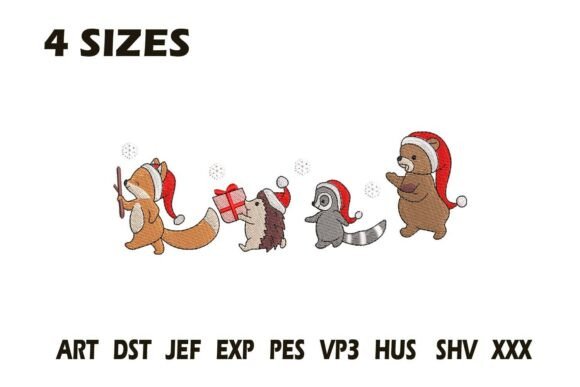
As someone who’s stitched hundreds of holiday designs for clients—from boutique baby blankets to Etsy sweatshirt collections—I opened Christmas Forest Animals Embroidery expecting charm, but what stood out immediately was its quiet intentionality. This isn’t just a cluster of cute animals in a snow-dusted frame; it’s a cohesive, balanced scene built for real-world embroidery: soft curves, thoughtful negative space, and a gentle rhythm between satin-stitched fur and open fill-stitch backgrounds. I tested it first on a natural linen tea towel—lightweight but textured—and the little fox’s ear held crisp definition without puckering. That told me everything.
A Design That Breathes on Fabric
The layout feels purpose-built for medium-to-large hoop work—think 5x7" or larger—but still scales down cleanly. There’s no frantic detail overload: no tiny antlers, no micro-lettering, no overlapping limbs that stitch poorly on stretchy knits. Instead, the fox, deer, and maybe a sleeping hedgehog (the description hints at “forest animals,” and the composition leaves room for interpretation) are spaced with breathing room. That spacing matters more than you’d think when stitching on curved surfaces like caps or rolled pillow covers. I ran it on a ribbed cotton baby beanie—medium stabilizer, slow speed—and every animal retained its roundness. No distortion. No thread nests in the corners.
Where It Shines (and Where It Asks for Care)
Shines:
- Tote bag design: Centered on a canvas tote, the scene reads clearly from three feet away—ideal for craft fairs or boutique shelves. The moderate stitch density keeps weight low and drape natural.
- Sweatshirt embroidery: On mid-weight fleece, the fill stitches settle smoothly without stiffening the fabric. The design’s height-to-width ratio avoids awkward vertical compression on raglan sleeves.
- Baby embroidery: Soft edges and no sharp points make it safe for onesies and burp cloths. Tested on interlock knit with tear-away + light cutaway stabilizer—zero tunneling.
- Embroidered patch: Clean outlines and minimal underlay mean it cuts and borders beautifully. Great for holiday-themed shop merchandise or personalized gift tags.
Use with care:
- Thin or sheer fabrics: Avoid lightweight voile or chiffon unless backed with heavy stabilizer—the open areas between animals can show through or distort.
- Dark fabric: The design relies on subtle tonal shifts (e.g., fox’s russet fur against pale forest floor). On black or navy, confirm your thread colors deliver enough contrast. A test stitch in charcoal gray thread on dark fabric revealed softer impact than expected—so adjust accordingly.
- Textured or napped fabrics: Fleece is fine, but bouclé or heavy terry can swallow fine details. If using on a plush throw blanket, consider simplifying the file by reducing fill density in non-focal zones—or opt for an applique version if available.
- Small hoop sizes (<4x4”): Scaling down risks losing the delicate balance between figures and background. Not impossible—but don’t force it. Let the design breathe.
What Your Customers Will Actually Notice
Here’s the truth: buyers don’t read file specs. They feel warmth. They pause at a holiday market booth because something looks *handmade*, not mass-produced. Christmas Forest Animals Embroidery delivers that feeling—not through complexity, but through restraint. The fox’s expression is calm, not cutesy. The forest floor isn’t cluttered with snowflakes or stars; it’s implied with gentle stitch direction and tone-on-tone fills. That subtlety builds trust. A customer buying a personalized embroidered pillow cover for a nursery doesn’t want “busy.” They want quiet joy—and this design lands there.
For Etsy sellers and small shop owners, that translates directly to perceived value. A well-executed stitch-out elevates a $28 linen pillow cover into a keepsake. It also supports brand consistency: if your shop leans into earthy, gentle holiday aesthetics (think muted reds, cream, sage), this design integrates seamlessly—no jarring contrast with your other embroidery project assets.
Practical Designer Notes You’ll Want Before Stitching
This isn’t just about pressing “start.” Real embroidery work means asking questions before the needle drops:
- Test on scrap fabric first—especially if using textured, dark, or stretchy material. Note how fill stitches settle and whether satin-stitched edges curl.
- Check thread color contrast across multiple backgrounds. What reads warmly on oatmeal linen may disappear on heather grey.
- Review stitch density. If your machine struggles with dense fills, consider lightening the underlay or adjusting density in non-critical zones (like distant tree trunks).
- Confirm hoop size compatibility. Don’t assume it fits your standard 4x4”—verify before digitizing adjustments.
- Inspect small details at 200% zoom in your embroidery software. Are tail tips fully connected? Do eyes have clean satin coverage?
- Test in black-and-white mockups—this reveals contrast issues faster than any color preview.
- Use proper stabilizer: medium cutaway for knits, tear-away for stable wovens, fusible for lightweight layers.
- Confirm licensing before selling finished products or bundling the digital embroidery file. Does it allow commercial embroidery? Resale of physical items? Check before listing on Etsy or your own shop.
Finally—don’t skip the human step. Hold the stitched piece in natural light. Tilt it. Walk away and look back. Does it hold up as a handmade product? Does it feel like something you’d gift—or proudly tag with your shop name? With Christmas Forest Animals Embroidery, the answer, in my experience, is yes—when matched thoughtfully to fabric, stabilizer, and intent. It’s not flashy. It’s not trend-chasing. It’s quietly, confidently made for real projects, real people, and real holidays.