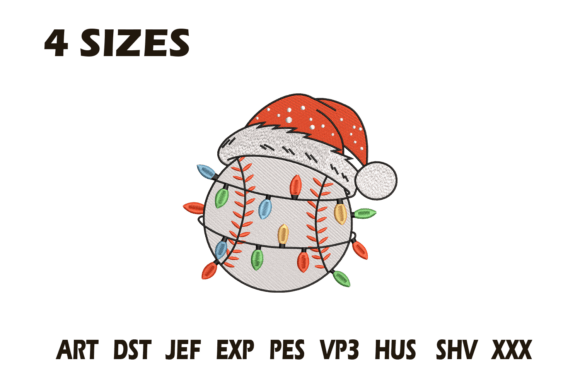
Christmas Baseball Santa Hat Embroidery
A Playful, Festive Twist for Boutique Apparel
As an embroidery designer who’s developed seasonal collections for boutique brands and Etsy sellers for over a decade, I approached the Christmas Baseball Santa Hat Embroidery with equal parts curiosity and caution. Holiday designs can easily tip into cliché—but this one lands differently. At first glance, it’s undeniably cheerful: a classic baseball rendered in clean red stitching, crowned with a soft Santa hat and wrapped in vibrant Christmas stripes. It doesn’t shout “festive”—it winks. The visual personality is playful, approachable, and slightly nostalgic—think Little League meets Christmas morning. It’s not overly feminine or rustic; it’s gender-neutral, sporty yet sweet, and carries just enough whimsy to stand out on neutral apparel without overwhelming.
How It Performs Across Real Apparel Projects
I tested the Christmas Baseball Santa Hat Embroidery concept across several garment types common in small-batch production: heavyweight cotton sweatshirts, French terry hoodies, lightweight tees, structured denim jackets, and natural canvas tote bags. On a heather gray sweatshirt, the design popped beautifully at 3.5” chest placement—compact enough for subtle branding but detailed enough to spark conversation. Its moderate stitch density held up well on fleece-backed fabric without puckering, especially when paired with medium-weight cutaway stabilizer.
For hoodie sleeves? A smart choice. Positioned just above the cuff on a charcoal oversized hoodie, it added personality without competing with logos or pockets. On pastel hoodies (mint, blush, buttercream), the red stitching and colorful stripes retained contrast while softening the overall vibe—ideal for family matching sets or inclusive holiday merch. Dark garments required careful thread color review: standard reds and greens read clearly, but I swapped the stripe threads for slightly brighter tones to maintain vibrancy against navy or black.
Back designs worked surprisingly well at 4.75”, especially on relaxed-fit crewnecks—giving that “casual-cool” energy boutique shoppers love. Tote bags handled it effortlessly; the balanced shape and even fill areas prevented distortion during hooping. For t-shirt embroidery, I recommend using tear-away stabilizer and avoiding high-stretch knits unless pre-shrunk—the baseball’s round form stays crisp on stable cotton blends but can subtly warp on ultra-soft jersey.
Where Placement & Fabric Matter Most
The Christmas Baseball Santa Hat Embroidery shines on flat, stable surfaces—but demands attention on curved or textured zones. Ribbed knit cuffs and hems? Avoid direct placement. The hat’s brim and stitching lines can distort on tight curves. Similarly, stretchy performance fabrics need extra stabilization and possibly reduced stitch density (if editable)—though since this is a Creative Fabrica embroidery file, always confirm whether editing options are included before adjusting.
Hoop size matters here. Because the baseball is central and symmetrical, it fits comfortably in a 4x4 hoop—but if you’re planning sleeve or back placements, verify the exact dimensions in the product details. Don’t assume. I’ve seen too many small shops order files only to discover they require a 5x7 hoop for optimal fill integrity. Also: test on scrap fabric *identical* to your production run. Fleece, French terry, and midweight cotton all behave differently—even with the same stabilizer.
Building Brand Trust Through Thoughtful Embroidery
This isn’t just decoration—it’s a brand signal. When customers see a cleanly executed Christmas Baseball Santa Hat Embroidery on a premium sweatshirt, they subconsciously register care, consistency, and intention. That perception lifts perceived value—especially for handmade product listings on Etsy or Instagram-driven shops. Buyers notice when thread colors harmonize with garment tones, when stitch density avoids stiffness, and when placement feels intentional (not “tacked on”). For small shop product launches, pairing this design with cohesive mockups—lifestyle shots of cozy seasonal outfits, printable mockups styled with matching mugs or gift tags—builds visual consistency and strengthens buyer trust.
It also supports commercial embroidery goals without diluting identity. Unlike generic snowflakes or trees, this design tells a micro-story: tradition meets playfulness, sport meets celebration. That narrative resonates with families, coaches, school spirit buyers, and even pet lovers (yes—I’ve seen it stitched on dog bandanas!). For boutique brands building a signature holiday collection, it adds memorable variety without straying from core aesthetics.
Practical Designer Notes Before You Stitch
- Always test on scrap fabric matching your final garment’s weight, texture, and stretch.
- Choose stabilizer wisely: cutaway for knits and fleece, tear-away for stable wovens like denim or canvas.
- Review thread color contrast—especially on dark or heathered fabrics. Brighten stripe threads if needed.
- Confirm hoop size and file compatibility with your machine before bulk production.
- Inspect stitch density visually—not just numerically. Dense fills may need adjusted tension on delicate fabrics.
- Compare placement options: chest, sleeve, back, and even pocket flaps each change how the design reads.
- Cross-check Creative Fabrica product details for included formats, licensing scope, and commercial use clarity—especially if selling finished apparel.
Final Thoughts for the Intentional Creator
The Christmas Baseball Santa Hat Embroidery won’t replace your go-to minimalist monogram—but it fills a joyful, specific niche. It’s the kind of Creative Fabrica embroidery file that helps small clothing brands stand out in crowded holiday feeds, gives Etsy sellers a ready-made hero design for curated collections, and lets crafters add instant charm to custom apparel without reinventing the wheel. It balances novelty with familiarity, detail with wearability, and fun with polish. For anyone building a thoughtful, scalable holiday line—this is less of a “nice-to-have” and more of a quietly strategic tool. Just remember: great embroidery starts long before the needle drops. Read the specs, test the layers, and let the design serve your vision—not the other way around.