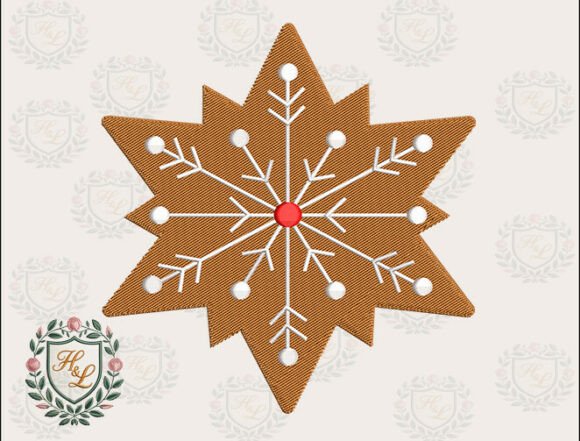
Winter Cookie Embroidery Files
A Designer’s First Look: Sweet, Festive, and Surprisingly Versatile
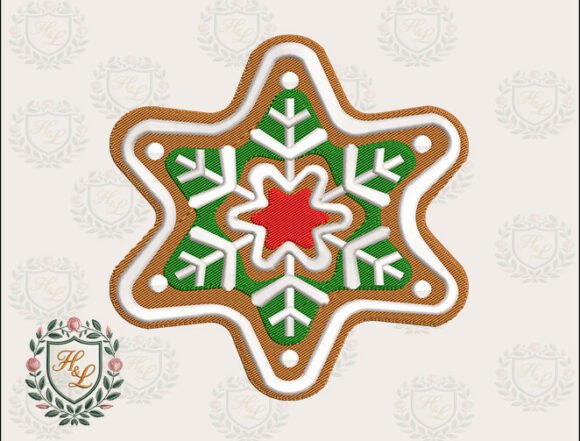
When I opened the Winter Cookie Embroidery Files, my first thought wasn’t “cute” — it was “usable.” As someone who tests dozens of embroidery files each season for client work, boutique product lines, and holiday gift collections, I’ve learned to spot designs that stitch cleanly versus those that look great on screen but unravel under needle tension. This one lands firmly in the former category. The shape is rounded and friendly — a soft-edged cookie with subtle icing swirls, a single candy dot, and just enough detail to read as handmade without demanding microscopic precision. It doesn’t scream “Christmas” with bells or snowflakes; instead, it leans into warmth, nostalgia, and kitchen-table charm. That makes it ideal not just for seasonal decor, but for year-round handmade products where holiday spirit feels personal, not performative.
Real-World Test: Stitching It on a Linen-Cotton Tote Bag
Last week, I used Winter Cookie Embroidery Files to embroider a set of linen-cotton tote bags for a local bakery’s holiday pop-up. Why this design? Because it scaled beautifully at 3.8 inches wide — large enough to anchor the front panel, small enough to leave room for hand-stamped tags and ribbon handles. The appliqué structure held up across three fabric batches: natural linen (slightly nubby), midweight cotton twill (smooth and stable), and a blended canvas (a little stiff but forgiving). On all three, the satin stitch edges stayed crisp, the fill stitches laid flat, and the running stitch outline added just enough definition without overloading the design. Customers responded immediately — not just with “Oh, how sweet!” but with “I want one for my daughter’s lunchbox” and “Can you do it on an apron too?” That kind of organic cross-product interest is rare. It means Winter Cookie Embroidery Files isn’t just decorative — it’s commercially resonant.
Where It Shines (and Where to Pause)
Winter Cookie Embroidery Files works exceptionally well for:
- Custom apparel — especially sweatshirts, crewneck tees, and baby onesies where softness and clarity matter more than flash;
- Tote bag design and pillow covers — its balanced proportions fill space without overwhelming;
- Holiday embroidery that avoids cliché — think tea towels for a cozy café, nursery decor for a December baby shower, or embroidered patches sewn onto denim jackets;
- Personalized gifts — pair it with a monogrammed initial or simple “Bake Joy” text block for Etsy listings that convert;
- Craft business consistency — it holds up across mockups, physical samples, and social media previews, reinforcing brand warmth without sacrificing professionalism.
That said, it’s not universally bulletproof. Use caution on:
- Curved surfaces like caps — the rounded shape can distort if hooped poorly; test on scrap first;
- Thin or stretchy fabric — like lightweight jersey or rayon challis — where stabilizer choice becomes critical (cutaway + tear-away combo recommended);
- Dark fabric backgrounds — the icing details rely on contrast; preview your thread colors in black-and-white mockups before stitching;
- Small hoop sizes under 4x4 inches — the design loses legibility when scaled below 3 inches, especially the candy dot and fine icing lines;
- Frequent-wash items like baby clothes or kitchen towels — verify stitch density isn’t overly dense in tight curves, which can stiffen fabric over time.
Design Integrity Meets Customer Trust
What separates Winter Cookie Embroidery Files from dozens of similar holiday motifs is its restraint. There’s no excessive puff, no tangled jump stitches, no over-engineered layers that gum up commercial machines. As a designer, that tells me the digitizer understood real-world constraints — not just what looks pretty in software, but what stitches reliably across machines, fabrics, and skill levels. For an Etsy seller or small shop owner, that reliability translates directly to customer trust. When a buyer receives a tote bag with clean, even stitching and no puckering around the cookie’s edge, they don’t see “digital embroidery file” — they see care, consistency, and craftsmanship. That perception elevates your entire product line, whether you’re selling finished goods or using the design as part of a larger branding suite.
Practical Designer Notes Before You Stitch
- Always test Winter Cookie Embroidery Files on scrap fabric matching your final project’s weight and texture — especially if using textured linen or knits;
- Review thread colors against both light and dark backgrounds; some icing tones may need slight adjustment for maximum readability;
- Check stitch density visually — areas like the candy dot and inner swirls should be dense enough to hold shape but not so tight they cause fabric distortion;
- Confirm hoop size compatibility with your machine and intended placement — don’t assume it fits a 4x4 if your final layout needs 5x7 clearance;
- Inspect small details at 200% zoom in your embroidery software — ensure no stray nodes or tiny unconnected elements;
- Use appropriate stabilizer: medium-weight cutaway for knits, tear-away for stable wovens, and fusible + tear-away for lightweight linens;
- If selling finished products, confirm licensing terms — many digital embroidery files allow commercial use, but always verify before listing on Etsy or wholesale platforms;
- For printable mockups or digital product previews, test how Winter Cookie Embroidery Files renders in grayscale — strong value contrast ensures clarity across devices and printouts.
Final Thought: A Design That Sells Itself
Winter Cookie Embroidery Files doesn’t try to be everything. It doesn’t mimic photorealism or chase trends. Instead, it delivers quiet confidence — the kind that comes from knowing your machine will run it smoothly, your customers will recognize its warmth instantly, and your handmade product will feel intentional, not incidental. Whether you’re stitching holiday gifts for family, building inventory for a craft fair, or expanding your digital embroidery file catalog for fellow designers, this one earns its place in your working library. Not because it’s flashy — but because it’s trustworthy, adaptable, and quietly joyful. And in embroidery, that’s the highest compliment you can give a design.