Flower Line Art Crack Embroidery Design
A Thoughtful First Impression for Boutique Apparel Designers
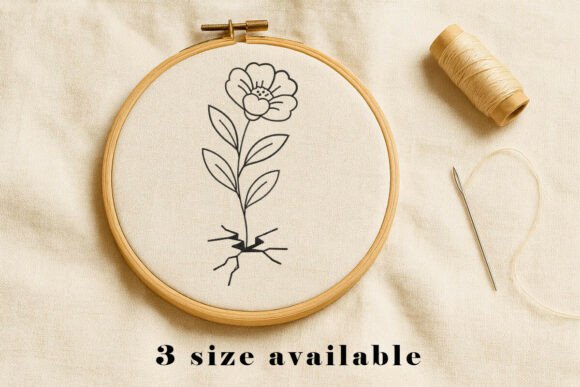
As an embroidery designer who’s developed collections for small clothing brands and Etsy sellers over the past decade, I opened the Flower Line Art Crack Embroidery Design with quiet curiosity—not hype. What struck me immediately was its visual restraint: a single botanical line drawing, uncluttered and intentional, tracing a delicate bloom emerging from fractured earth. It doesn’t shout. It breathes. This isn’t fussy floral filler—it’s symbolic minimalism built for meaning. The clean outline stitch carries a quiet confidence—neither overly feminine nor aggressively modern. It lands somewhere between timeless and tender: classic enough for heirloom sweatshirts, current enough for Instagram-driven lifestyle branding. For boutique apparel, that balance is gold.
How It Performs Across Real Garment Surfaces
I tested the Flower Line Art Crack Embroidery Design across six garment types I regularly use for client collections: neutral cotton-blend sweatshirts, heather grey hoodies, charcoal French terry, soft pastel fleece hoodies, structured denim jackets, and heavyweight canvas totes. On each, it held its own—but not in the same way.
- Sweatshirt embroidery: Ideal for left-chest placement on midweight pullovers. The outline quality reads cleanly even at 3.5–4 inches wide—no fill stitches to distort fabric drape or add bulk.
- Hoodie design: Works beautifully on the upper sleeve (just below the shoulder seam) or centered low on the back panel. Its linear nature avoids competing with ribbed cuffs or drawcord hems.
- T-shirt embroidery: Best on 100% cotton or combed ringspun tees—not jersey-heavy blends. Pair with matte thread colors (heather grey, oat, deep moss) to preserve its understated tone.
- Tote bag design: A standout on natural canvas or unbleached linen. The crack motif gains tactile resonance against raw-edged fabric textures.
- Denim jacket accents: Subtle but memorable on the back yoke or inner cuff lining—especially when stitched in tonal indigo or ecru thread.
- Seasonal layers: Paired with cable-knit cardigans or corduroy vests, it reads as thoughtful detail—not decoration.
Where Placement & Fabric Matter Most
The Flower Line Art Crack Embroidery Design shines brightest where intention meets execution. That means knowing where *not* to place it just as much as where to. Avoid dense stitching zones like side seams or underarm gussets—the outline’s integrity relies on stable fabric movement. On stretchy knits or fleece-backed hoodies, always pair with medium-weight cutaway stabilizer; the clean lines won’t forgive puckering. Ribbed fabric? Test first—vertical ribs can visually interrupt the flow of the stem or crack lines. And while it reads well on dark garments (especially with high-contrast thread), avoid placing it over curved surfaces like bicep peaks unless you’re willing to digitize minor adjustments for distortion compensation.
Building Brand Identity Through Quiet Symbolism
This isn’t just another Creative Fabrica embroidery file—it’s a narrative anchor. The flower-through-crack motif resonates deeply with audiences seeking authenticity: wellness communities, mental health advocates, small business founders, and makers recovering from creative burnout. When used consistently across a collection—say, chest-embroidered on matching sweatshirts and back-embroidered on oversized tote bags—it builds visual consistency without repetition fatigue. Buyers begin to recognize your brand’s voice: gentle strength, grounded growth, handmade care. That recognition translates directly to trust—and repeat purchases. For Etsy sellers and small shop product lines, that emotional resonance often outperforms trend-chasing graphics.
Practical Notes Every Embroidery Designer Should Confirm
Before committing to production, here’s what I always verify with any machine embroidery design, especially one as compositionally sensitive as the Flower Line Art Crack Embroidery Design:
- Test on scrap fabric matching your final garment’s weight and stretch—don’t rely on muslin alone.
- Confirm stabilizer choice: cutaway for knits, tear-away for stable wovens, and optional topping for fuzzy fleece.
- Review thread color contrast—light thread on light fabric may vanish; dark thread on dark fabric needs sheen or texture variation to read clearly.
- Check hoop size compatibility with your machine and intended placement (e.g., chest embroidery rarely exceeds 5" width).
- Inspect stitch density: since this is an outline-only design, confirm there are no unintended jump stitches or nesting in tight curves.
- Compare placement options using printable mockups—scale matters more than you think with linear motifs.
- Review Creative Fabrica product details carefully: licensing terms, included file formats, and whether the Embroidery file supports your machine brand.
Final Thoughts for Creative Entrepreneurs
If you're curating a capsule collection for your boutique brand—or building a cohesive line for your Etsy shop—the Flower Line Art Crack Embroidery Design offers something rare: versatility without vagueness. It works equally well as a subtle chest accent on a charcoal hoodie and as a bold back statement on an oversized canvas tote. Its strength lies not in complexity, but in clarity of concept and execution. For small clothing brands investing in custom apparel, that kind of dual-purpose design saves time, reduces inventory risk, and strengthens storytelling across touchpoints—from lifestyle product photos to social media graphics. As a professional embroidery designer, I don’t reach for this file when I need flash. I reach for it when I need resonance. And in today’s market, resonance sells.