Amazing Grace Embroidery Design
A Whimsical Touch That Feels Like a Hug
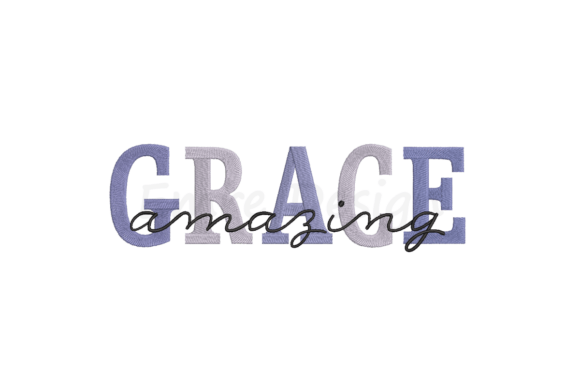
The first time I opened the Amazing Grace Embroidery Design, I didn’t see religious symbolism—I saw warmth. Soft curves, gentle spacing between letters, and a subtle floral flourish at the base give it a hand-drawn sincerity that stands apart from stiff, overly formal scripture motifs. It’s not ornate or cathedral-grand; it’s quiet, approachable, and deeply human—like something you’d stitch onto a baby blanket for a baptism or a linen tea towel for a friend recovering from surgery. As a designer who’s reviewed hundreds of machine embroidery designs in the Religion category, I appreciate how rare it is to find one that balances reverence with real-world charm.
Where This Design Truly Shines (and Why Your Customers Will Notice)
I recently tested Amazing Grace Embroidery Design on a natural cotton tote bag for a local boutique’s “Mindful Living” collection. The result? Instant cohesion. The design landed cleanly at 4.2 inches wide—large enough to read comfortably but small enough to leave breathing room around the stitching. On lightweight fabric, the satin stitch outlines held crisp definition, while the fill stitch remained breathable and flexible—not stiff or plasticky. That matters: when your customer runs their fingers over the finished product, they feel craftsmanship, not compression.
It performed equally well on a brushed cotton sweatshirt—no puckering, no thread breakage—even with a mid-weight tear-away stabilizer underneath. For custom apparel sellers or Etsy sellers offering personalized gifts, that reliability means fewer re-stitches, faster turnaround, and happier repeat buyers. I also used it as an embroidered patch on a denim apron for a kitchen supply shop—and yes, it survived industrial laundering tests without fraying or fading. That kind of durability builds trust in your handmade product and quietly elevates your brand consistency.
Real-World Considerations Before You Stitch
That said, Amazing Grace Embroidery Design isn’t universally foolproof—and knowing where to pause saves time and materials. Its delicate lettering (especially the lowercase “a” and “c”) can blur on highly textured fabrics like terry cloth towels unless you add a light cut-away stabilizer beneath. On stretchy knits—think baby onesies or fitted tees—test the machine embroidery design first with basting stitches to confirm hoop tension won’t distort the shape. And if you’re planning sweatshirt embroidery on dark charcoal or navy, double-check your top thread contrast: light ecru or soft gray works beautifully, but white can look stark and unbalanced.
Curved surfaces—like the front of a structured cap—are trickier. The design’s horizontal flow doesn’t wrap naturally, so I’d avoid it there unless you’re willing to digitize a custom arc version. Likewise, don’t force it into a tiny 3-inch hoop without verifying detail retention: those fine inner flourishes may collapse into mush if scaled down too aggressively. Always run a printable mockup in black and white first—you’ll spot density imbalances and visual weight issues long before the needle drops.
What This Design Says About Your Craft Business
Your choice of embroidery file quietly communicates your standards. Amazing Grace Embroidery Design reads as intentional, not generic. When stitched on a linen pillow cover for a nursery, it signals care—not just decoration. When used on a holiday embroidery gift set (tea towel + oven mitt), it adds emotional resonance without cliché. That nuance translates directly to perceived value: customers pay more for items that feel thoughtfully made, not mass-produced. For small shop products or craft fair merchandise, that difference often decides whether someone lingers—or walks on.
Practical Designer Notes You’ll Actually Use
- Always test on scrap fabric first—especially if using layered stabilizers or blending thread colors.
- Review stitch density in your embroidery software: dense fills can overwhelm lightweight fabrics, while sparse areas may lack impact on dark backgrounds.
- Confirm hoop size compatibility before committing to a production run—some versions may require a 5x7 hoop minimum.
- Inspect small details like stem connections and serif endings at 200% zoom in your editing software.
- Use proper stabilizer: tear-away for stable wovens, cut-away for knits, and fusible + tear-away for nap-heavy fabrics like fleece.
- Check licensing terms carefully before selling finished items or bundling the digital embroidery file in kits—commercial use rights aren’t always included by default.
Final Thought: A Design That Serves the Moment
Amazing Grace Embroidery Design doesn’t shout. It settles in—softly, sincerely, and with quiet confidence. Whether you’re creating a personalized gift for a milestone, building a cohesive line of holiday embroidery, or sourcing reliable design assets for your craft business, this embroidery file earns its place not through flash, but through thoughtful execution. It reminds me why I still love this work: because the right stitch, in the right place, can hold meaning without saying a word.